
Education Center

Understanding Predictable Revenue for Small Businesses
Small Business, Predictable Revenue, Cash Flow
What Does “Predictable Revenue” Actually Mean for a Small Business Owner?
Predictable revenue means your business brings in income that you can reasonably forecast and rely on month after month, instead of riding a stressful roller coaster of “great months” followed by “how-are-we-going-to-make-payroll” months. For a small business owner, it’s the difference between guessing and knowing: you have clear, data-backed expectations for future sales, a steady flow of leads and customers, and systems in place that make your income more stable, less reactive, and easier to grow on purpose rather than by accident.
In practice, predictable revenue shows up as consistent monthly cash flow, reliable sales pipelines, repeat business, and marketing that works in a measurable way. It doesn’t mean every month is identical or that nothing ever goes wrong. It means you’ve built enough structure, tracking, and repeatable processes that your revenue is no longer a mystery—it’s a manageable, improvable system that supports your goals, your team, and your sanity.
Key Takeaways: What You’ll Learn in This Guide
What “predictable revenue” actually means in real-world small business terms (not just theory or buzzwords).
Why predictable revenue matters for your stress levels, hiring decisions, and long-term growth plans.
The core ingredients of a predictable revenue engine: leads, conversion, pricing, and retention.
Simple metrics every small business owner should track to make revenue more reliable and less surprising.
Practical steps you can start taking this month to move from “hope-based” revenue to “system-based” revenue.
What Predictable Revenue Is (and What It Isn’t)
Let’s clear something up right away: predictable revenue is not perfection. It doesn’t mean every month hits your dream number, or that you’ll never lose a client, or that your industry will never change. Markets still move. People still cancel. Life still happens. Predictable revenue is about building enough structure, data, and repeatability into your business that you can plan with confidence instead of guessing and hoping.
In concrete terms, a small business with predictable revenue usually has:
A consistent way new leads find them (referrals, ads, content, partnerships, or a mix).
A reasonably steady conversion rate from lead to paying customer, based on a repeatable sales process.
Offers and pricing that are clear, compelling, and designed to create recurring or repeat revenue where possible.
Basic tracking of numbers—so you know what’s working and what isn’t before it becomes a crisis.
What it isn’t: a magical “set it and forget it” system, a guarantee that nothing will ever dip, or a one-size-fits-all formula. Predictable revenue is built, not bought. It’s a combination of strategy, systems, and habits that work together to make your income more stable and more controllable over time.
Why Predictable Revenue Matters So Much for Small Business Owners
If you’ve ever stared at your bank account on the 25th of the month and thought, “I hope something comes in soon,” you already know why predictable revenue matters. But beyond that gut-level stress, there are some very practical reasons this concept is worth your attention:
Better cash flow planning: When you can reasonably forecast what’s coming in, you can make smarter decisions about expenses, investments, and growth instead of constantly reacting to surprises.
Confident hiring and delegation: It’s much easier to bring on help—whether a part-time assistant or a full-time employee—when you’re not guessing if you’ll be able to afford them in three months.
Reduced personal stress: Unpredictable revenue doesn’t just affect your business; it follows you home. More stability means better sleep, fewer money arguments, and more mental space for strategy instead of survival.
Higher business value: If you ever want to sell your business or step back from day-to-day operations, a predictable revenue engine is one of the biggest assets a buyer—or successor—will look for.
💡 Pro Tip: Ask yourself, “If I stopped marketing and selling for 30 days, what would still come in automatically?” The smaller that number is, the more opportunity you have to build predictability.
The Four Building Blocks of Predictable Revenue
1. Predictable Lead Generation
You can’t have predictable revenue without predictable leads. Many small businesses rely on “random acts of marketing”—a post here, an event there, a referral when they’re lucky. Predictable lead generation means you have repeatable channels that bring new people into your world consistently, such as:
A steady referral system (you intentionally ask for and reward referrals).
Paid ads that you track and optimize, not just “set and hope.”
Content or email marketing that regularly brings in inquiries and bookings.
The key is not having every possible channel. It’s having a small number of reliable ones you understand and can forecast. For example, you might know that if you spend $500 on ads and send two emails to your list, you’ll typically generate 10–15 qualified leads. That’s a foundation you can plan around and improve over time.
2. A Repeatable Sales Process
Next, you need a way to turn those leads into paying customers that doesn’t depend entirely on your mood, your memory, or your last-minute improvisation. A repeatable sales process might sound complicated, but it can be as simple as:
A defined sequence: inquiry → discovery call → proposal → follow-up → close.
Standard questions you ask on every call to qualify and understand needs.
Email templates for proposals and follow-ups so nothing falls through the cracks.
When you follow a consistent process, you can start to measure your conversion rate (for example, “40% of discovery calls become paying clients”). Combine that with your lead numbers, and you suddenly have a much clearer picture of your likely future revenue.
3. Offers and Pricing Designed for Stability
Some business models are naturally more predictable than others. If you only sell big, one-time projects, your revenue will usually be lumpier than a business with recurring subscriptions or long-term contracts. That doesn’t mean you must switch models entirely, but it does mean you can design your offers and pricing to support more stability:
Introduce retainers or maintenance packages after a one-time project is complete.
Offer payment plans that create steady monthly cash flow instead of one big check.
Create a lower-priced, recurring offer (like a membership, support plan, or ongoing coaching) to smooth out income between larger sales.
Predictable revenue thrives when your offers are clear, consistent, and aligned with how your best customers actually want to buy from you over time—not just once.
4. Retention, Referrals, and Repeat Business
One of the most overlooked parts of predictable revenue is what happens after the first sale. Keeping a good customer is almost always easier and cheaper than finding a new one. When you intentionally design how you’ll stay in touch, add value, and invite people back, you create a second engine of predictability:
Simple check-in systems (e.g., quarterly reviews, follow-up emails at set intervals).
Clear “next step” offers for existing clients so they know how to keep working with you.
A structured referral program that rewards clients for sending new business your way.
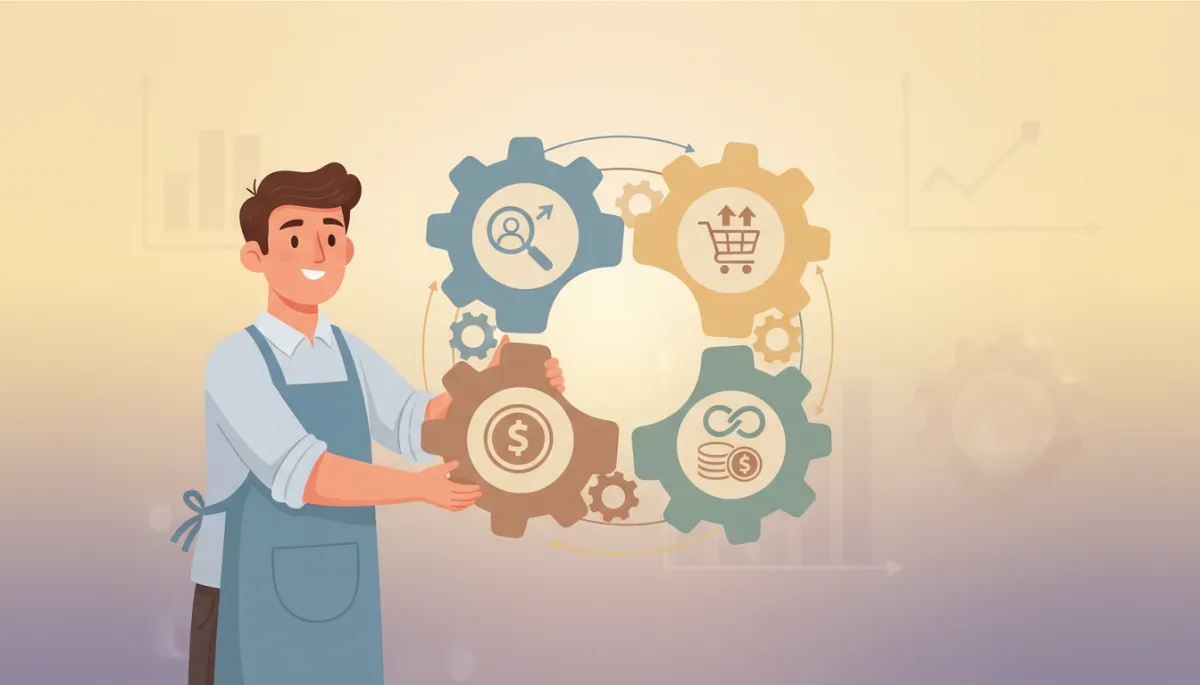
Predictable revenue comes from connecting small, repeatable systems into one steady engine.
The Simple Metrics That Make Revenue More Predictable
You don’t need a CFO or a complicated dashboard to start making your revenue more predictable. A basic spreadsheet or simple CRM can be enough. Here are a few core numbers to track consistently:
Monthly Leads
How many new inquiries, discovery calls, or sign-ups are you getting each month, and from which sources?
Conversion Rate
What percentage of leads become paying customers? Even an approximate number is incredibly useful.
Average Transaction Value
On average, how much does a customer spend with you per purchase or per contract?
Repeat Purchase Rate or Retention
How often do customers come back, renew, or buy again over time?
With just these four metrics, you can start to answer powerful questions like, “If I increase my leads by 20% and my conversion rate by 5%, what does that do to my revenue?” or “If I raise my prices by 10% and improve retention by one extra month, how much more stable does my cash flow become?”
💡 Pro Tip: Don’t wait for perfect data. Start tracking from this month forward. Predictability comes from consistent habits, not flawless spreadsheets.
How Predictable Revenue Changes Your Day-to-Day Life
Beyond the numbers, predictable revenue changes how it feels to run your business. Instead of waking up wondering where the next client is coming from, you wake up knowing what actions you need to take and what results they’re likely to create. That shift from anxiety to agency is huge.
You can set realistic monthly and quarterly revenue targets—and actually hit them more often than not.
You can schedule vacations or time off without silently panicking that everything will collapse while you’re away.
You can invest in tools, training, or team members with a clearer sense of when those investments will be covered by incoming revenue.
In short, predictable revenue gives you options. Options to grow, to slow down, to pivot, or to double down—without feeling like every decision is a gamble.
Practical First Steps to Build More Predictable Revenue This Quarter
Audit where your current revenue actually comes from. Look back over the last 3–6 months. Which offers, clients, or channels brought in the most income? What was most reliable? What felt the most chaotic? This gives you a baseline and usually reveals some quick wins.
Choose one lead source to stabilize. Instead of trying to be everywhere, pick the channel that already works best and commit to a simple, consistent plan. For example, “Run one core ad campaign and send one value-packed email every week.”
Define your standard sales process. Write out the steps from first contact to paid client. Add basic templates for follow-ups. Even a simple checklist can dramatically reduce “slipped through the cracks” revenue leaks.
Create or refine one recurring or repeatable offer. This might be a maintenance plan, a monthly service, a membership, or a follow-on package. The goal is to turn more one-time wins into ongoing stability.
Start tracking your core metrics weekly. Leads, conversion rate, average transaction value, and retention. Keep it simple but consistent. Over a few months, you’ll start to see patterns—and opportunities to improve predictability.
📌 Key Takeaway: You don’t build predictable revenue overnight. You build it by improving one piece of the system at a time—then letting those improvements compound.
Frequently Asked Questions About Predictable Revenue for Small Business Owners
Do I need a subscription or membership model to have predictable revenue?
No. Subscriptions and memberships can definitely help, but they’re not the only path. Service businesses, agencies, consultants, trades, and local brick-and-mortar shops can all build predictable revenue through a mix of repeat business, retainers, maintenance plans, and steady lead generation. The key is repeatability, not any one specific business model.
How long does it take to make my revenue truly predictable?
It depends on your current starting point. Many owners start to feel a noticeable difference in 60–90 days once they commit to tracking their numbers and stabilizing one or two key systems. Building a truly strong, reliable revenue engine often takes 6–12 months of focused effort—but each small improvement usually pays off along the way, not just at the end.
What if my industry is seasonal? Can my revenue still be predictable?
Yes—predictable doesn’t have to mean “the same every month.” For seasonal businesses, predictability often looks like understanding your cycles, building strong off-season offers, and planning cash flow accordingly. You might know that 60% of your revenue comes in during a few peak months, and you design your marketing, savings, and staffing to match that reality instead of fighting it or being surprised by it every year.
Isn’t this just about “hitting a revenue goal” each month?
Revenue goals are part of the picture, but predictable revenue goes deeper. It’s about understanding the inputs that lead to those goals—how many leads you need, how many calls you need to book, what offers convert best, and how long clients typically stay. When you focus on the system instead of just the number, hitting your goals becomes far more realistic and repeatable.
Do I need fancy software or a big team to make this work?
Not at all. Many small businesses build very solid predictable revenue systems with nothing more than a simple CRM, a calendar, a basic email tool, and a spreadsheet. A bigger tech stack or team can help you scale later, but the foundations—clear offers, consistent lead generation, a repeatable sales process, and basic tracking—can be built lean and simple.
Conclusion: Predictable Revenue Is a System, Not a Secret
For a small business owner, “predictable revenue” isn’t some mysterious corporate buzzword. It’s the very practical ability to look ahead a few months and have a reasonable, data-backed sense of what’s coming in—because you’ve built systems that consistently generate leads, convert customers, and keep them coming back. It’s about turning your business from a roller coaster into a train: still moving, still exciting, but running on tracks you understand and control.
You don’t need a perfect plan or a massive overhaul to get started. You need a clear view of where your revenue is coming from today, a few focused improvements to your lead generation and sales process, offers that support stability, and the discipline to track a handful of simple metrics over time. Step by step, those pieces add up to a business that feels calmer, stronger, and far more under your control.
Ready to make your revenue more predictable—without guesswork or overwhelm? You don’t have to figure out all the moving pieces alone.
If you’d like personalized help mapping out a predictable revenue plan tailored to your specific business, book a free discovery call with Patrick Smith. On this call, you’ll walk through where your revenue is coming from now, identify the biggest opportunities to create stability, and outline practical next steps you can start implementing right away.
Schedule your free discovery call with Patrick Smith today at MeetPatrickSmith.com and take the first step toward truly predictable revenue for your small business.

Search for Articles Here

© 2026 My Biz Suite - All Rights Reserved.
*Several of our plans have additional communication fees for phone calls, SMS, email, and AI usage.