Social Media's Impact on Local Business Success
Local Marketing, Social Media Strategy
Does Social Media Actually Bring in Customers for Local Businesses — or Is It Just Busy Work?
In 2026, social media absolutely can bring in real, paying customers for local businesses — but only when it’s treated as a strategic sales and relationship channel, not as random “post and hope” busy work. Studies show that around 73% of small businesses now see social media advertising as effective or very effective at driving sales, and typical returns range from about 1.8× to over 5× on ad spend when campaigns are planned and measured. If your social feeds are not producing customers, the problem is usually the strategy, not the platform itself.
When you use social media to do a few key things consistently — show up with local, relevant content, use video and social commerce tools, run targeted ads, and track what’s working — it becomes one of the clearest paths to growth for local businesses. On the other hand, posting random photos once in a while with no offer, no targeting, and no tracking will feel exactly like what you fear: a time‑consuming chore that doesn’t move the needle. This article will help you tell the difference and show you how to make social media work like a real customer acquisition engine, not just another to‑do on your list.
Key Takeaways: Is Social Media Worth It for Local Businesses?
Social media works for most small businesses: 96% use it, and roughly 73% say it effectively drives sales, with average returns between 1.8× and 5.2× on ad spend, depending on industry and strategy (xtendedview, zipdo, newmedia).
It becomes “busy work” when you post without a clear goal, local focus, or way to measure results — not because social media itself is broken, but because the plan is missing.
Short‑form video and shoppable posts currently deliver the strongest ROI, with video converting up to 34% better than static content and shoppable posts driving about 1.7× more conversions (xtendedview, newmedia).
Hyper‑local targeting, community storytelling, and local influencer partnerships help you reach people who can actually walk through your door, not just random followers around the world.
AI and automation tools now let many local businesses manage social media in 3–5 hours a week instead of 10–15, while actually increasing consistency and engagement (greenonion, ustechautomations).
The real win comes when you treat social media as a complete system: attract with content, convert with clear offers and calls to action, and retain customers with ongoing engagement and customer service.
Why Social Media Feels Like “Busy Work” for So Many Local Owners
If you’ve ever stared at a blinking cursor thinking, “What on earth do I post today?” you’re not alone. Many local owners were told they “have to be on social,” so they created accounts, posted a few photos, and waited for magic to happen. When customers didn’t immediately flood in, social media got mentally filed under “necessary evil” or “time suck.”
The problem is rarely that social media doesn’t work. It’s that the way it’s being used is disconnected from the business model. Common patterns include:
Posting without a goal (no clear intention to drive visits, bookings, or sales).
Talking to “everyone” instead of speaking directly to your local audience and neighborhood culture.
Ignoring simple tracking — so even when it is working, you can’t see it clearly and lose motivation to continue.
The result is a feed full of “nice” content that doesn’t clearly invite people to take the next step. It looks active, but it isn’t connected to revenue. To fix this, we need to look at how social media is actually performing for local businesses right now — and how to plug your efforts into what’s working.
What the Numbers Say: Does Social Media Really Drive Local Revenue?
Across the board, social media is no longer an optional “extra.” Around 96% of small businesses now use it for marketing, and surveys in 2025–2026 show that about 73% consider their social media advertising effective or very effective at driving sales. Return on ad spend (ROAS) commonly falls in the 1.8× to 2.8× range, with some reports citing averages as high as 5.2× when campaigns are dialed in and tracked properly (xtendedview, zipdo, newmedia).
Industry‑specific data is especially encouraging for local businesses. Retail, home improvement, restaurants, and health and wellness — all classic “local” categories — report ROAS from about 164% up to 215% (vicarcreative). In plain language, many local businesses are seeing roughly $1.60–$2.15 in revenue for every $1 they put into social ads. That’s before you consider lifetime value, referrals, and repeat visits that stem from those new customers.
On the organic (non‑paid) side, social remains a discovery and validation tool. Local customers routinely check Instagram, Facebook, or TikTok to see if a business is active, trustworthy, and a good fit before they visit. In many towns, if your feed looks dead, people quietly assume the business might be struggling or even closed. That alone makes a consistent, well‑run presence worth the effort — even before you add in paid campaigns and social commerce features that can directly drive sales.
How Local Businesses Are Using Social Media Successfully in 2026
The local businesses winning with social media right now are not necessarily the ones posting the most — they’re the ones posting with purpose. Several clear trends have emerged in 2026 that you can borrow, no matter your industry or city size.
1. Hyper‑Local Targeting and Storytelling
Platforms like Facebook, Instagram, and TikTok now offer powerful hyper‑local targeting — you can reach people in specific ZIP codes, neighborhoods, or even within a radius of your storefront. Smart local businesses combine this with content that clearly signals “we’re part of your community.” Think:
Posts referencing local events, schools, and landmarks.
Collaborations with neighboring businesses and local nonprofits.
Offers tailored to specific neighborhoods or audiences (for example, “Navy family discount” or “teachers’ appreciation week” in a school‑heavy area).
This local‑first approach outperforms generic, “everyone everywhere” messaging because it speaks directly to the people most likely to become regulars. Research from markets like Annapolis shows that aligning content with neighborhood identities and local events significantly boosts engagement and foot traffic (eyeonannapolis).
2. Short‑Form Video and “Authenticity 3.0”
Short‑form video (Reels, TikToks, YouTube Shorts) now dominates consumer attention, making up a large share of what people actually watch on social. These formats also drive higher ROI: video campaigns convert about 34% better than static ads, and short video ads are reported to deliver 1.6× higher ROI than image‑only posts (newmedia, gozoek).
The good news: you don’t need a polished studio. Today’s audiences prefer “Authenticity 3.0” — real humans, real stories, and behind‑the‑scenes moments over heavily scripted commercials. For local businesses, that might look like:
A 30‑second clip of a stylist explaining how to care for curly hair between appointments.
A restaurant owner tasting a new menu item on camera and asking followers to vote on the name.
A contractor doing a quick “before and after” walk‑through of a recent project in your city.
These videos don’t just entertain — they build trust, show expertise, and give people a clear feel for what it’s like to work with you or visit your business. That emotional familiarity is a major factor in whether someone chooses you over a competitor they’ve never “met” online.
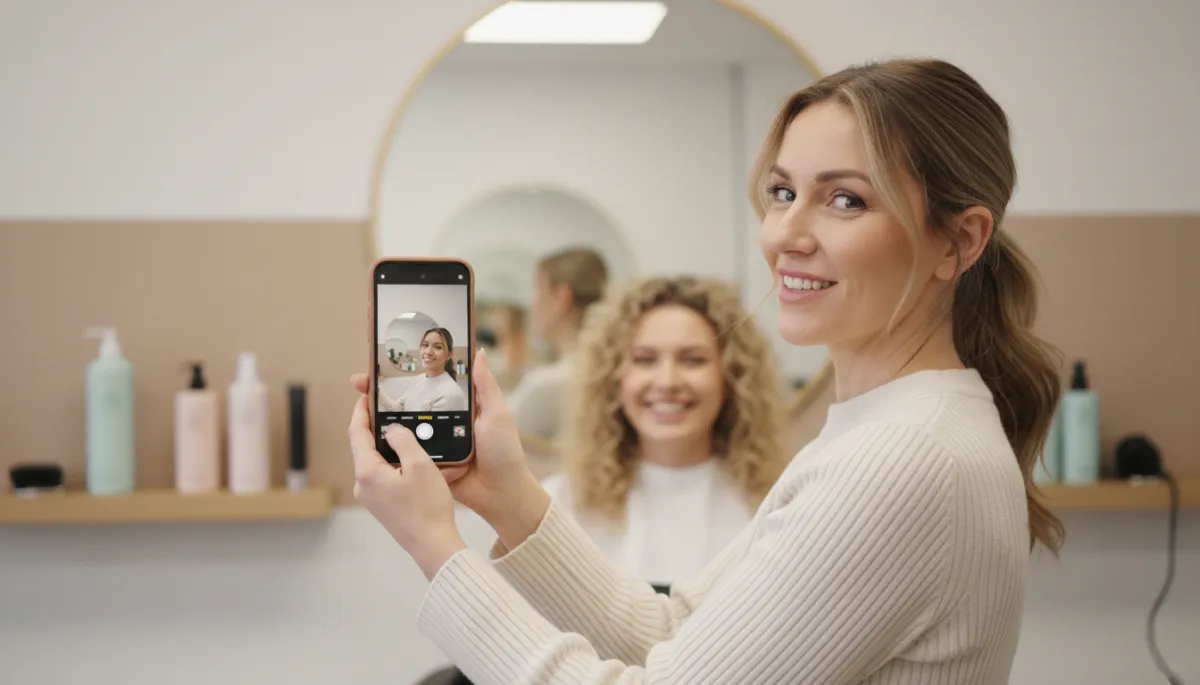
Simple, authentic short videos often outperform polished ads for local engagement.
3. Social Commerce and “Click to Buy” for Local
Social media is no longer just about awareness — it’s increasingly where purchases happen. More than half of U.S. users made at least one purchase via social media in 2025, and global social commerce is expected to surpass $1 trillion in 2026 (socialxpresso). Shoppable posts and in‑app checkout make it easy for customers to move from “That looks nice” to “I just bought it” in seconds.
For local businesses, that might mean:
Tagging products in Instagram posts and Reels so customers can reserve or buy immediately.
Using Facebook or Instagram Shops to sell gift cards, class passes, or merchandise.
Linking directly to booking systems for services like spa appointments, home estimates, or consultations.
Data shows that shoppable posts drive roughly 1.7× more conversions than non‑shoppable posts, and user‑generated content (customers sharing their own photos and reviews) can increase conversion rates by about 4.6% (newmedia). In other words, when you make it easy to buy — and show real people enjoying what you offer — social media becomes a direct revenue channel rather than just a branding exercise.
4. AI, Automation, and Doing More in Less Time
One of the biggest reasons social media feels like busy work is the time it takes. The good news is that by 2026, most small businesses are using at least one AI or automation tool to lighten the load, and around 40–45% use generative AI for marketing content and customer service (greenonion). Automation platforms can:
Schedule posts in advance so you’re not glued to your phone every day.
Repurpose content (for example, turning one long video into several shorter clips).
Auto‑reply to common questions like hours, location, or booking links via DMs.
Businesses using automation tools report saving about 4.7 hours a week and boosting posting consistency by 40%, which correlates with more than double the engagement per post (ustechautomations). That’s a big shift: social media becomes a system you maintain for a few hours a week instead of a never‑ending chore that steals time from serving customers.
5. Social Media as a Customer Service and Trust Channel
Younger customers in particular now expect to reach businesses via social DMs rather than phone or email. They ask about availability, pricing, reservations, and even support issues right inside Facebook, Instagram, or TikTok. Businesses that respond quickly and professionally turn these interactions into trust‑building moments — and often into sales or repeat visits.
When you handle public comments and reviews well — thanking happy customers, addressing concerns respectfully, and moving sensitive conversations to private messages — you’re not just talking to one person. You’re showing every future customer who scrolls your feed how you handle problems. That reputation value is hard to measure in a spreadsheet, but it absolutely influences who chooses you over another option.
Turning Social Media from Busy Work into a Customer Engine: A Simple Framework
So how do you turn all of this into a practical, manageable plan? Here’s a straightforward framework you can adapt to almost any local business, whether you run a café, salon, law practice, gym, or home services company.
Step 1: Define Success in Plain Numbers
Before you post anything, get specific: what does “social media working” actually mean for you? Examples:
“We want 20 extra takeout orders per week from Instagram and Facebook.”
“We want 10 new consultation bookings per month from social traffic.”
“We want 30 new email subscribers per month via social to grow our list.”
Once you know your target, you can choose offers, calls to action, and content that support that goal — and you can tell whether things are improving month over month, instead of guessing based on likes alone.
Step 2: Build Simple Content Pillars That Lead to Action
Instead of waking up and deciding what to post on the spot, create 4–5 “pillars” you rotate through. A proven structure for local businesses is:
Education: tips, how‑tos, checklists that solve your audience’s everyday problems.
Proof: testimonials, before‑and‑after photos, case studies, and user‑generated content.
Personality: behind‑the‑scenes posts, team spotlights, founder stories, and community involvement.
Offers: time‑bound promotions, bundles, events, and clear calls to book or buy.
Local Signals: posts tied to neighborhood events, local news, and partnerships.
Rotate through these pillars using mostly short‑form video plus a mix of photos and carousels. Aim for 3–5 posts per week, which research suggests is a sweet spot many small businesses can maintain with AI and scheduling tools (greenonion).
Step 3: Use Paid Ads Strategically, Not Random Boosts
Many local owners have tried “boosting a post” once or twice, seen mixed results, and concluded that ads don’t work. The reality: ads work best when they’re part of a simple funnel, not one‑off experiments. A basic local funnel might look like:
Awareness ads: short videos introducing your business to people within 5–10 miles of your location.
Consideration ads: testimonials, before‑and‑afters, or educational tips shown to people who watched or engaged with your first videos.
Conversion ads: clear offers with “Book Now,” “Order Now,” or “Claim Offer” buttons retargeting people who visited your website or profile.
Local businesses often start with $15–$35 per day per location and see early signals within a few weeks, with more stable performance after 60–90 days (pearlmediacompany). The key is to let the system run long enough to optimize instead of constantly starting and stopping.
Step 4: Track the Right Metrics (Beyond Likes)
One reason social media ROI feels fuzzy is that many businesses only look at vanity metrics: likes, follows, and views. Those numbers matter, but they’re not the whole story. To know whether social media is truly bringing in customers, track:
Clicks to your website or booking page from each platform.
Number of DMs asking about availability, pricing, or appointments.
Coupon codes or offer redemptions tied specifically to social campaigns.
New email or SMS subscribers who came from social links.
While only around 30% of marketers feel confident measuring social ROI, those who use proper tracking and attribution report dramatically higher impact — one study cites up to 4,800% greater pipeline influence when measurement systems are in place (sender.net). You don’t need to be that advanced to start; even a simple spreadsheet tracking inquiries and redemptions can show you whether your efforts are paying off.
FAQ: Common Questions Local Owners Ask About Social Media ROI
How long does it take for social media to start bringing in customers?
For organic content alone, you may see early results — such as DMs, comments, and small bumps in foot traffic — within a few weeks of consistent posting. For paid campaigns, many local businesses start seeing clear signals within 2–4 weeks and more stable, predictable results after 60–90 days of continuous testing and optimization. The key is consistency: sporadic posting and on‑again, off‑again ads rarely produce reliable results.
How much should a local business spend on social media ads?
Many local advertisers start with $15–$35 per day per location and adjust after 1–3 months based on performance. The right budget depends on your market size, industry, and goals, but it’s better to run a focused, well‑structured campaign at a modest daily budget than to scatter a few random boosts. The important thing is to commit to a test period, track results, and then either scale what works or adjust your targeting and creative.
Which platforms are best for local businesses in 2026?
Facebook and Instagram remain the core platforms for most local businesses, thanks to their reach, local targeting, and robust ad tools. TikTok and YouTube Shorts are powerful for short‑form video and reaching younger audiences, while LinkedIn is especially effective for B2B or professional services. Rather than trying to be everywhere, pick 1–2 platforms where your ideal customers already spend time and commit to doing those well first.
Do I need to post every day for social media to work?
No. Many successful local businesses post 3–5 times per week and use Stories or short‑form videos to stay visible in between. What matters more than daily posting is consistency, quality, and relevance to your local audience. It’s far better to maintain a realistic schedule you can stick with than to go all‑in for a month and then disappear for three.
What if I’m not comfortable on camera?
You don’t have to become a full‑time influencer. Start small: voice‑over videos showing your products, hands‑only demonstrations, or customer‑focused clips where you’re behind the camera. Over time, consider brief appearances — even 10–15 seconds of you saying hello, sharing a tip, or introducing a team member can make a big difference in how “real” your business feels to customers. Remember, authenticity beats perfection every time for local audiences.
How do I know if social media is actually bringing in customers?
Combine simple tracking methods: ask new customers how they heard about you, use unique coupon codes for social campaigns, track clicks from social to your booking or order pages, and monitor DMs that turn into appointments or sales. Over a few months, patterns will emerge. If you see more inquiries, bookings, and redemptions tied to social, you’ll know it’s more than just busy work — it’s a real growth channel.
Conclusion: Social Media Isn’t the Problem — the Plan Is
When you zoom out and look at the data, one thing becomes clear: social media is working for a majority of local businesses. It’s where customers discover new places to eat, shop, work out, and get services. It’s where they check whether a business feels active and trustworthy. And increasingly, it’s where they click to book, buy, or ask questions directly. The platforms themselves are not the issue — the missing piece is usually a simple, focused strategy that connects your posts to your profits.
If social media currently feels like busy work for you, it’s a sign to step back and redesign your approach, not to abandon it entirely. Define what success looks like in numbers, build content pillars that educate, prove, and invite action, use paid ads thoughtfully, and track the metrics that actually matter. With a clear plan and a few smart tools, you can turn social media from a nagging obligation into a steady source of new customers and stronger relationships with the ones you already have.
If you’d like help turning your social media from “we post sometimes” into a focused customer‑getting system tailored to your local market, you don’t have to figure it out alone. Book a free discovery call with Patrick Smith at MeetPatrickSmith.com to talk through your goals, your current efforts, and a practical plan to make social media finally pay off for your business.